
Menu
Why Soil Testing Matters Before Pouring a Concrete Slab in Doral
Concrete Slab Doral
Proper soil testing is a crucial first step in preparing for a concrete slab in Doral, as it will determine your project’s success or failure on an immediate basis and whether the structure will be able to last through its intended design service life. The geology of South Florida presents several distinct challenges that need to be assessed by a trained professional to prevent costly damage and/or safety issues. A good understanding of the composition of the soil (i.e., clay, sand, silt), how much weight the soil can bear, how well water drains through the soil, and how reactive the soil is allows you to engineer your concrete slab(s) to perform at their optimal level during their service life. Miami-Dade County has building codes that are very prescriptive regarding what type of testing must be completed before concrete placement in order to provide protection for all parties involved. Therefore, investing in a comprehensive analysis of the soils before placing your concrete will save you money in the event of repairs down the road; plus, it will help you comply with local regulatory requirements and professional engineering standards.
Doral’s Unique Soil Composition and Challenges
Doral’s soil is a combination of limestone rock, sand, clay, and organic material, which creates a number of construction challenges. As a result of its proximity to the Everglades, Doral has a very high water table; this, combined with variable soil densities and potential for settlement, makes it difficult to get concrete slabs to perform well. Because the soil in Miami-Dade County contains as much as 80 percent calcium carbonate, the soil in Miami-Dade County is quite different from most soils you find elsewhere. Therefore, you need specialized testing techniques and interpretation by a geotechnical engineer who is familiar with South Florida geology. Depending upon the location of your project in Doral, your soil could be completely different in terms of characteristics just a few feet away. Therefore, it is essential to test each property, rather than rely solely on neighboring property data. This will enable you to better predict how your concrete slabs will perform under varying types of loads and environmental conditions.
Water Table and Drainage Considerations
High water tables throughout Doral present major challenges to the curing process and long-term durability of concrete slabs. Water levels fluctuate with the seasons and can create soil movements that stress concrete slabs unless they are properly addressed during the design and installation phases.
Essential Soil Testing Parameters
There are numerous parameters involved in soil testing for concrete slabs. The first parameter is soil bearing capacity, which is essentially the maximum load that the soil can withstand without excessive settlement. Bearing capacities generally vary between 1,500 and 4,000 pounds per square foot, depending on the type of soil and the degree of compaction. The second parameter involves evaluating the soil reactivity of the soil, which indicates how much the soil will expand and contract as a result of changing moisture conditions.
Compaction testing is another key component of soil testing, because it verifies whether the soil has been adequately compacted to support the weight of the concrete. Compaction testing is completed by professional geotechnical engineers utilizing Standard Penetration Tests (SPT) and other field-based evaluations to identify in-situ soil conditions. Laboratory analyses of the soil samples provide further detail regarding the soil composition, chemical corrosiveness, and engineering properties of the soil, all of which are vital to designing a concrete slab properly.
Chemical Analysis of Soils
One of the most important aspects of soil testing in Doral is analyzing the chemical composition of the soil to identify any potential corrosive threats to the concrete and any embedded reinforcing steel, especially given Doral’s proximity to the ocean. High chloride content, low pH values, and elevated sulfate concentrations can greatly impact the durability of the concrete and may require special protective measures during construction.
Florida Building Code Requirements for Soil Testing
Chapter 18 of the Florida Building Code specifically addresses soils and foundations, and requires that professional geotechnical evaluations be completed before issuing building permits for projects that may be affected by soil conditions that can affect the structural integrity of the project. Miami-Dade County adds additional requirements to the Florida Building Code to accommodate the unique local conditions and to mitigate the effects of hurricanes.
To comply with the Florida Building Code and the Miami-Dade County requirements, testing must be performed by a licensed geotechnical engineer, utilizing approved testing methods and equipment. Test results must indicate sufficient bearing capacity, proper compaction levels, and adequate drainage to obtain the necessary building permit.
Properties located in the Doral Central Park area and other developed areas may have their own specific requirements, based on prior knowledge of the local soils and experiences with previous constructions in the area.
Inspection Requirements for Permits
Before commencing construction, building permits for concrete slabs will normally require a geotechnical report, which demonstrates that the soils meet the requirements for bearing capacity and compaction. In addition, inspections will occur during the construction phase to ensure that the soil preparation meets the specifications provided in the geotechnical report before concrete placement.
Reducing Risk of Settlement and Structural Damage
Failure to prepare the soil properly for a concrete slab is the main reason why many concrete slabs fail. This failure often manifests itself as cracking, uneven settlement, and ultimately structural damage, which can cost tens of thousands of dollars to repair. However, conducting soil testing allows you to identify potential problem soils, which may be loose fill material, organic deposits, or expansive clays that undergo large volume changes as a function of moisture content. By performing these tests, you can identify the best course of action to prevent structural damage to your property.
Benefits of Long-Term Durability of Quality Testing and Preparation
Proper soil testing and preparation of the soil will directly increase the longevity of your concrete slabs and reduce the amount of maintenance required to keep them functioning. A well-designed foundation based on accurate data collected from soil testing will be able to resist settlement, cracking, and moisture-related problems that would otherwise compromise a poorly constructed slab.
Cost-Effectiveness of Testing before Construction
Although the upfront costs associated with conducting quality soil testing can range from $1,500 to $5,000 or more, depending on the size and complexity of the project, the cost is insignificant when compared to the potential repair costs for foundation problems. Foundation problems can range from $10,000 to $50,000 or more to repair, making the costs associated with testing a worthwhile investment in insurance against future problems.
Testing results can help identify the most efficient construction method to achieve the desired results for your site-specific conditions. If your property has good soil, you may not require additional reinforcement or increased slab thickness, whereas poor soil conditions that are identified early in the process can be remedied to avoid costly post-construction repairs.
Warranty and Insurance Implications of Testing
Many contractors and warranty companies require documentation of soil testing to validate their warranties for problems related to the foundation of your home. Additionally, quality testing provides you with a means to prove your case if you are unable to resolve soil-related issues, despite your having employed a qualified professional.
Methods Used to Test Soils
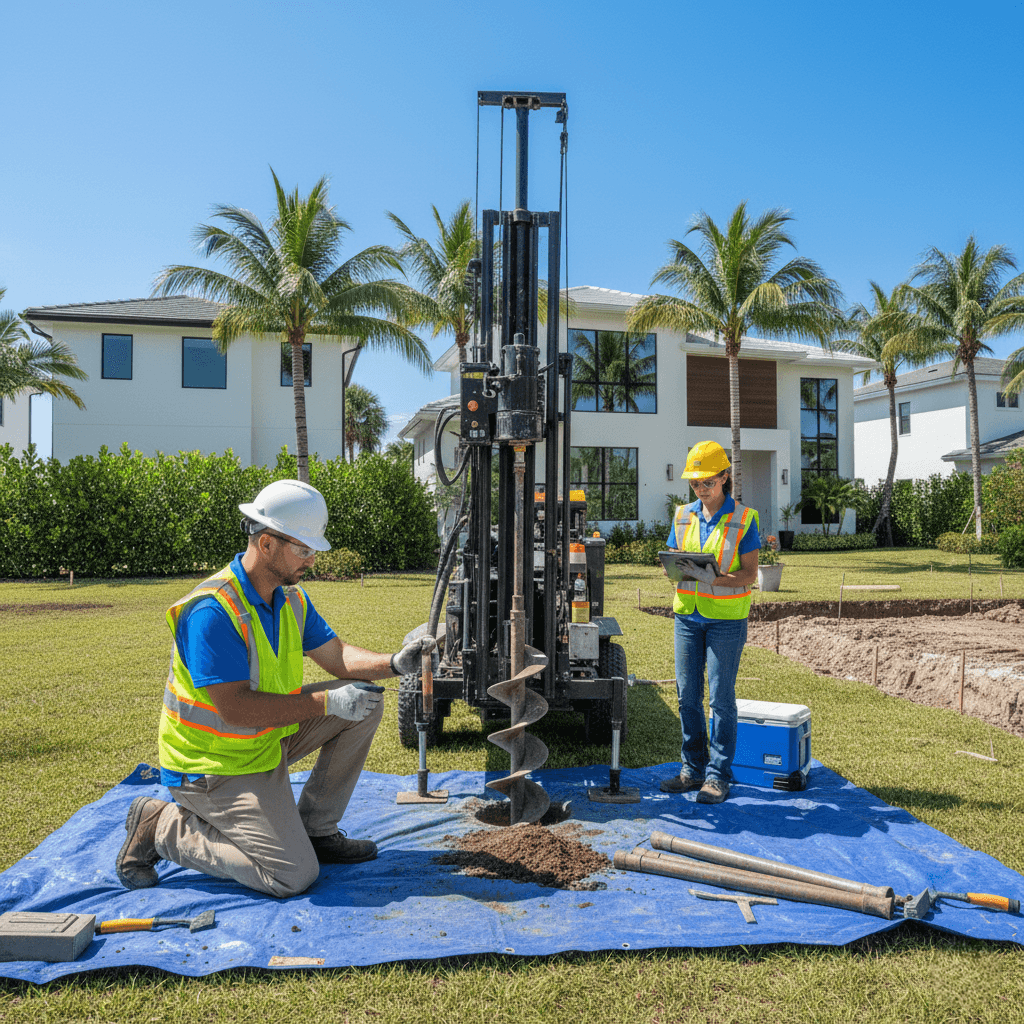
Standard Penetration Tests (SPT) are used to determine the density of the soil and the bearing capacity of the soil at various depths. The SPT provides the data needed to design the foundation for your structure. These tests involve inserting sampling equipment into the ground while recording the resistance encountered during insertion, to identify layers of soil and their respective strengths.
Boring Logs Document Conditions of the Soil Throughout the Depth of Investigation
Boring logs provide a record of the soil conditions throughout the entire depth of investigation, and are typically extended far below the proposed foundation levels. Compaction tests are performed to determine the optimal moisture content of the soil and the achievable density of the soil to support the weight of the concrete. Laboratory analyses of the soil samples provide the detailed engineering properties of the soil, including grain size distribution, plasticity characteristics, and chemical composition.
Specialized Testing May Be Required
Depending on the specific requirements of your project, specialized testing may be required to evaluate the corrosive potential of the soil, the rate of drainage of the soil, and the ability of the soil to expand and contract with moisture changes.
Field Testing Methods
Professional soil testing is performed using standardized methods and calibrated equipment. While collecting the soil samples, field technicians record the site conditions, groundwater levels, and other factors that can affect the performance of the concrete slabs.
Interpretation of Geotechnical Reports
A geotechnical report is a translation of complex soil data into practical construction recommendations. Recommendations are made concerning the allowable bearing pressure of the soil, the compaction requirements, and the soil improvements that are required to support the concrete slabs. The report includes recommendations concerning the design parameters of the concrete slabs, including the minimum thickness of the slab, the amount of reinforcement required, and the need for a vapor barrier based on the site-specific conditions.
Experienced Engineers Can Identify Local Challenges
Engineers experienced in working with the soils of Doral can provide recommendations that are tailored to the local conditions and challenges, including the high water table, variable soil conditions, and the potential wind uplift forces from hurricanes. Typically, the reports include specific construction procedures, quality control requirements, and recommendations for maintaining the slabs over the long term.
Implementing Geotechnical Recommendations
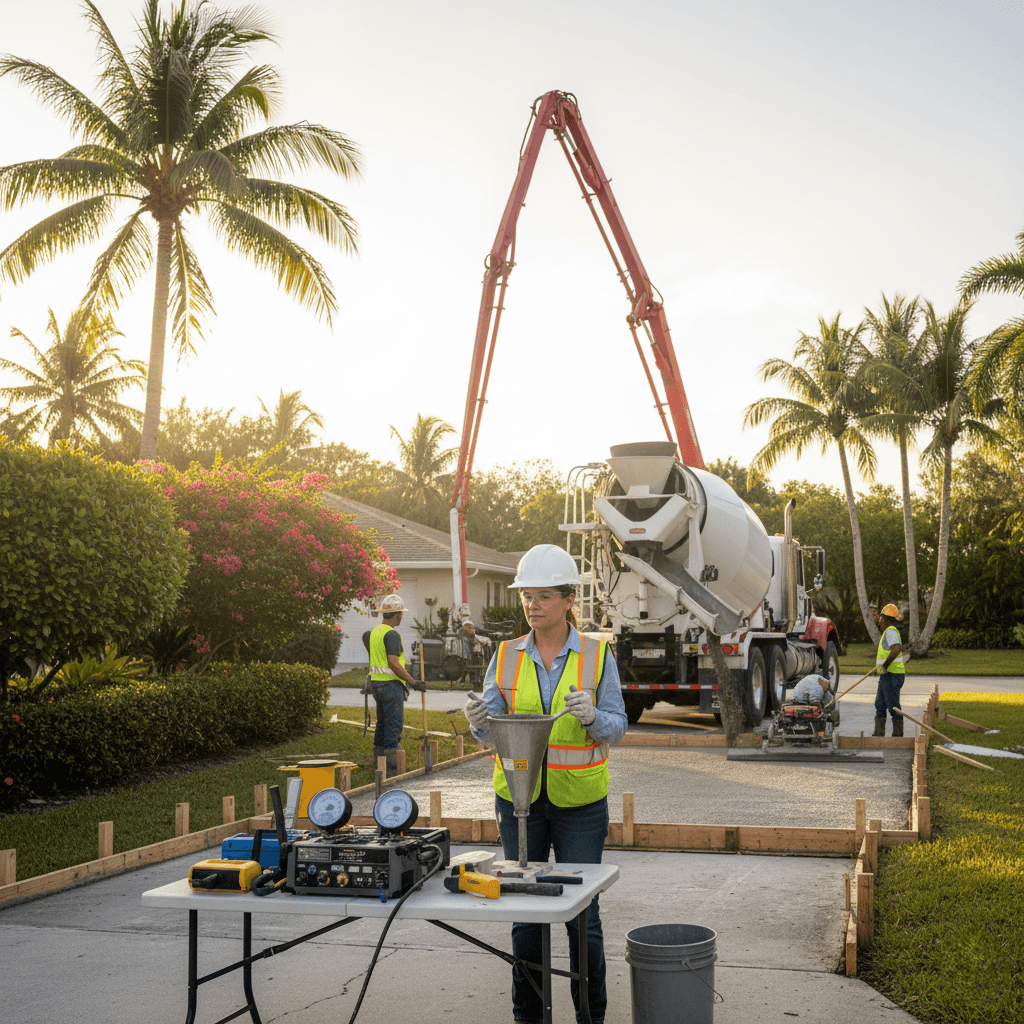
During construction, geotechnical recommendations will guide all aspects of preparing the soil and installing the concrete slabs, from excavating to the final placement and curing of the concrete. By implementing these specifications, you will be assured that the concrete slabs will perform as designed and comply with the applicable building codes.
Remedial Measures to Improve Problematic Soils
If the testing indicates that the soil is problematic, there are a variety of remedial measures that can be taken to develop a suitable foundation for the concrete slabs. Some of the remedial measures include mechanical compaction using the proper equipment and moisture control to improve the density of loose or improperly compacted soils. Chemical stabilization, using lime or cement, can improve the stability of weak soils and reduce their expansive potential. Over-excavation and replacing the soil with engineered fill can also provide a reliable foundation for the concrete slabs. Improving drainage using French drains or dewatering systems can also alleviate the problems caused by high groundwater levels.
Continuous Testing During Remediation
All of the remedial measures listed above require continuous testing to verify that the intended results were achieved. Testing must verify that the soils have reached the desired density and that the moisture content is optimum for chemical stabilization treatment.
Seasonal Variations and Environmental Factors
Weather patterns in Florida can affect both the time frame for testing and constructing concrete slabs. For example, wet season conditions can reveal drainage issues that do not appear until the dry season. Similarly, preparing for hurricane season requires special consideration of wind uplift and flooding potential. Therefore, testing must take into account the seasonal variations and environmental factors that can affect the performance of the concrete slabs.
Impact of Salt Air Intrusion Near Coastal Areas
Salt air intrusion can affect both the chemical properties of the soil and the durability of the concrete, especially in the coastal areas of Doral. Therefore, comprehensive testing is required to identify any potential corrosive threats to the concrete and embedded reinforcing steel. Protective measures can then be taken to mitigate these risks.
Preparing for Future Climate Changes
As sea levels continue to rise and storms become increasingly intense, future soil and groundwater conditions may be impacted. Therefore, the testing results obtained today will become even more valuable for long-range planning and adaptation strategies.
Selecting Experienced Testing Firms
It is essential to choose experienced geotechnical engineers who are knowledgeable of the conditions in South Florida to ensure that your testing is completed accurately and that the recommendations made apply to the local conditions. Licensed professionals understand the requirements of Miami-Dade County, the local soils, and effective remediation techniques for the problems commonly encountered in this region. In addition to understanding the local soils and conditions, qualified testing firms utilize calibrated equipment, follow established testing protocols, and provide comprehensive reports that support your permitting and construction activities.
Making Informed Decisions Based on Quality Testing
Comprehensive quality soil testing will serve as the foundation for making informed decisions regarding your concrete slab projects, from the preliminary assessment of your property’s feasibility to selecting the most appropriate construction methods and establishing the maintenance plans for the long term. Knowing the site-specific conditions will enable you to select the right contractors, materials, and construction methods to ensure success.
Quality Testing Provides Peace of Mind
Quality soil testing serves as a means of protecting your investment in your property, and provides peace of mind knowing that your concrete slabs will operate safely and reliably for generations. Although the cost of quality testing is a relatively minor expense, the benefits of quality testing, including improved performance, lower maintenance costs, and the prevention of costly structural damage, justify the costs of testing.
We know how important quality soil testing is to the success of your concrete slab project. At Doral Concrete Works, our experience with local conditions and commitment to quality construction provide us with the ability to thoroughly evaluate your site and develop a plan for the soil preparation that is best suited to achieving the desired results for your specific project.
LATEST POSTS